 en
en
 Français
Learn about and discover wine with Les Plus Beaux Villages de France
Learning about and getting to know wine
France is often regarded around the world as THE wine country, where the wine-growing landscapes and terroirs are as beautiful as they are varied. Indeed, France has the highest per capita wine consumption, averaging 52.6 litres per person per year. This is no coincidence: wine is part of French culture. It has played a part in the development of the country’s economy throughout history and in its global influence. It has also shaped its landscapes. No other country in the world boasts such a diverse range of appellations, producers and terroirs. The climate makes France seem like the promised land of wine: you can find almost anything there.
But how many of those who pretend to be experts really know their stuff when it comes to impressing guests at the dinner table?! Because unless you’re in the trade, the diversity of vineyards and appellations looks rather like a gigantic jigsaw puzzle! Every vineyard has its own history, and some of our Plus Beaux Villages de France have created dedicated spaces for learning about and discovering wine. Landscapes, terroirs, grape varieties, vineyard work… From the vineyards of the Jura to Château-Chalon , to the slopes of the Luberon in Ménerbes, wine will hold no more secrets for you by the end of your stay!
____________________________________________________________________________________________________
Château-Chalon: discovering Vin Jaune and the Jura vineyards
Landscapes and terroirs of the Jura
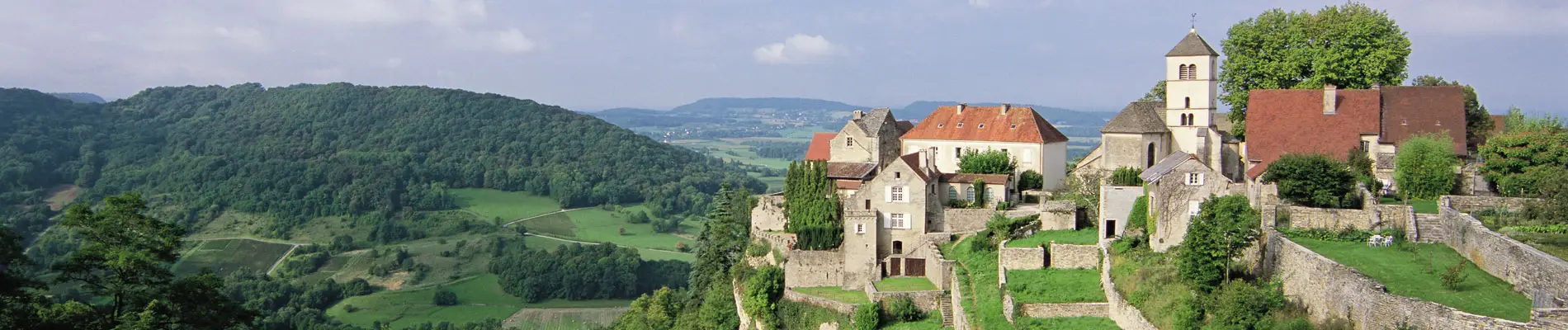
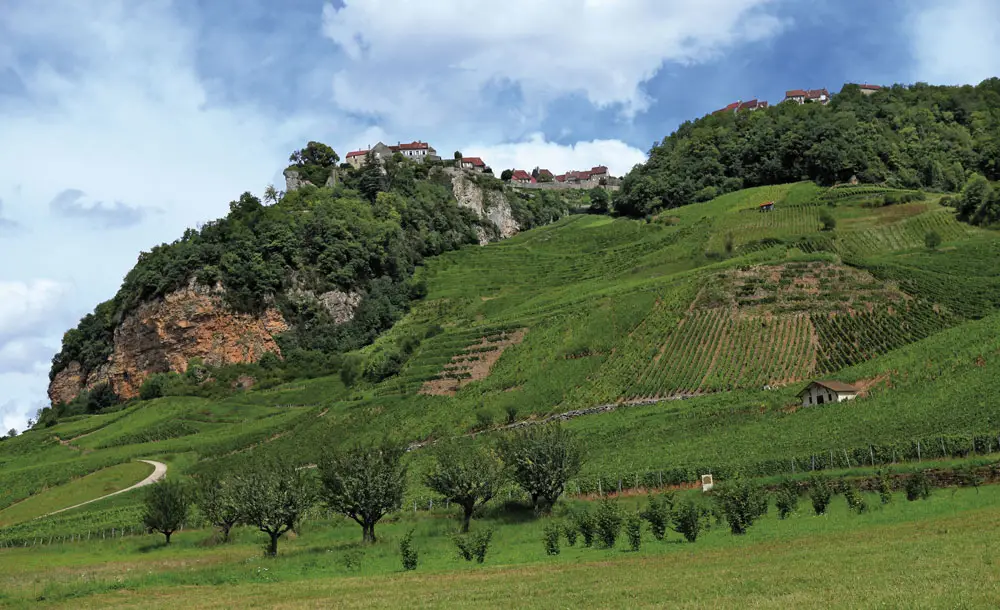
From one of the three viewing points along the route through Château-Chalon (Jura), it is easy to see why the landscape before you has been designated a ‘Site of Outstanding Beauty’. Some fifteen kilometres from Lons-le-Saunier, overlooking the Seille valley and the Bresse plain, this village with its sturdy winegrowers’ houses stands like a lighthouse watching over the vineyards that stretch down to the foot of the “Jura reculé”.
Since 2006, Château-Chalon has been a signatory to the ‘Fontevraud International Charter’ for the ‘protection, management and promotion of vineyard and wine landscapes’, which involves, amongst other things, promoting these landscapes through a range of tourist services designed to welcome visitors and help them discover the area. It was in response to this commitment that the Maison de la Haute-Seille. This former guesthouse of Château-Chalon Abbey combines local heritage with technology to tell the story, in a fun and interactive way, of the identity and life of this region – from the geological phenomenon of the “Jura reculée” to the remarkable heritage of its abbeys and castles, not to mention its wines and cheeses… Paying tribute to the region’s most famous product, the tour concludes with a screening of the film “Mystères du Vin Jaune de Château-Chalon”, which won the Landscape and Environment Award at the 2008 Oenovidéo festival (an international documentary film festival on vines and wine).
Château-Chalon, the birthplace of Vin Jaune
Originating from a Benedictine abbey, the village also owes its wine-growing heritage to the nuns who planted the first Savagnin vines as far back as the Middle Ages. Whilst the name of this grape variety may not ring a bell, the name of the wine produced exclusively from it will certainly be more familiar, as it is the famous Vin Jaune ! Produced mainly within theChâteau-Chalon AOC, Vin Jaune must meet very specific specifications to earn its appellation. In addition to its single grape variety (Savagnin), it must be aged in oak barrels for a minimum of six years and three months, during which time part of the wine evaporates – the ‘angels’ share’ – and a yeast film forms. This veil protects the wine from oxidation and gives it its distinctive “yellow flavour”. Vin Jaune must then be bottled in 62 cl bottles known as “clavelins”.
Alongside Côtes du Jura, Arbois and L’Etoile, Vin Jaune is one of the four geographical AOCs of the Jura wine region. In the village, the winegrowers will introduce you to their range of ‘Côtes du Jura’ white and red wines, as well as Vin de Paille (a sweet wine produced, in particular, by drying the grapes on racks for several months before vinification), Macvin (another sweet wine made by blending grape must with marc brandy) and Crémant du Jura, a sparkling wine produced throughout the region, made from grapes harvested by hand.
Your wine-themed break in Château-Chalon:
The Maison de la Haute-Seille: An unmissable destination to learn all about the Haute-Seille hillsides (their landscapes, terroirs, heritage and local people) and, of course, about wine-growing. Guided and commented tastings will allow you to discover the region’s various grape varieties, appellations and AOCs.
Evening events and wine-tasting walks: During the summer, the Maison de la Haute-Seille organises walks lasting around two hours, including a Crémant tasting break. The walks are followed by an evening of Jura food and wine pairings, hosted by local winegrowers.
That little extra:
Eat in or take away (but in moderation!): The village is home to 9 wine estates where you can sample the finest wines from Château-Chalon! A few excellent restaurants will also give you the chance to try the famous Bresse chicken cooked in Vin Jaune!
____________________________________________________________________________________________________
Ménerbes: the flavours of the Luberon
In the heart of the Luberon Regional Nature Park
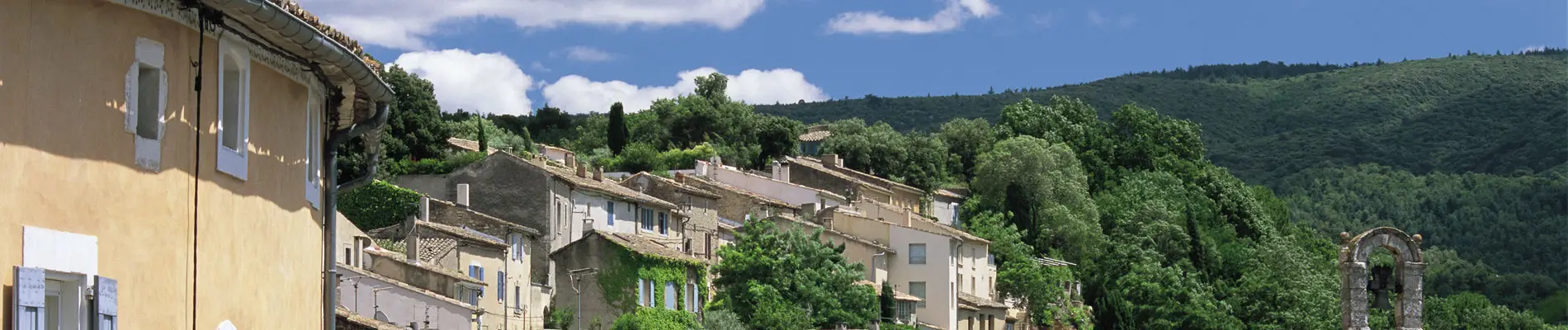
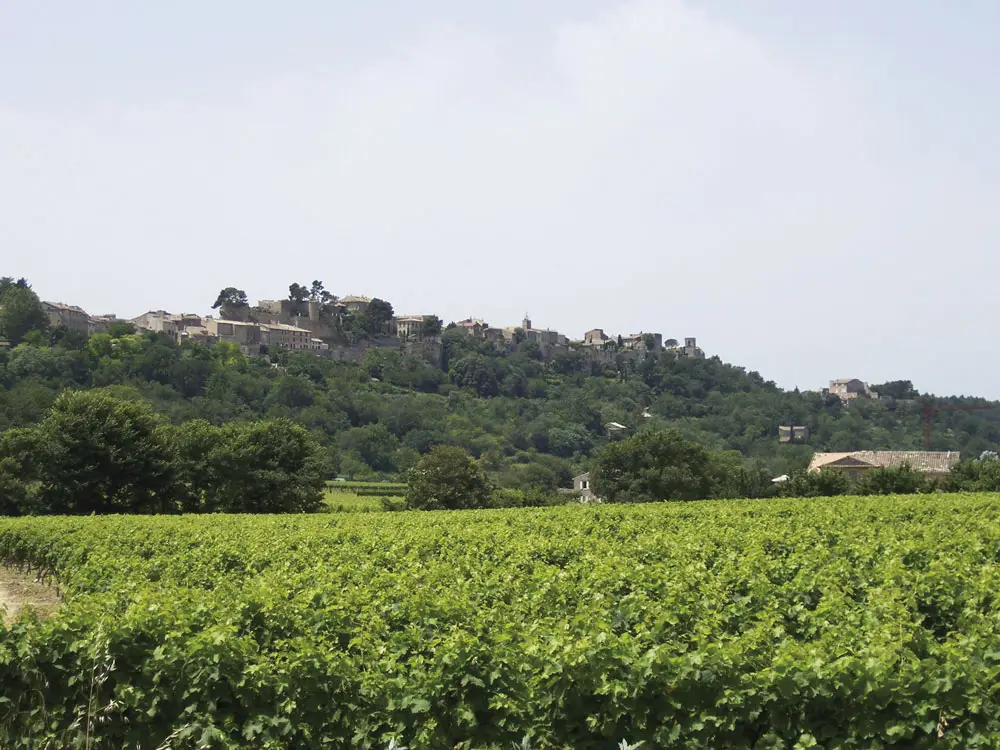
About fifteen kilometres east of Cavaillon, nestled like a ship on one of the slopes of the Luberon, Ménerbes overlooks a sea of garrigue and vineyards. Whilst vine-growing in the Luberon dates back to antiquity, theLuberon AOC is a more recent development. Established in 1988, it produces red, rosé and white wines and covers the entire area of the Luberon Regional Nature Park. The wines produced here are blends: Syrah, Grenache Noir, Mourvèdre, Carignan and Cinsault for the reds and rosés; and Grenache Blanc, Clairette Blanche, Vermentino, Bourboulenc, Roussanne, Marsanne, Ugni Blanc and Viognier for the whites. In Ménerbes, seven estates produce Luberon AOC wines.
Ménerbes: wine as a way of life
With a rich heritage spanning the ages, from the Middle Ages through to the Renaissance, Ménerbes also stands out for its cultural identity and elevates the art of living to a way of life! It is here, in fact, that Yves ROUSSET-ROUARD – a man with an unusual career path: former mayor of the village, former notary’s clerk and film producer who switched to viticulture – has created two venues combining discovery, education and conviviality: the Maison de la Truffe et du Vin du Luberon and the rather unusual Corkscrew Museum...
Housed in the magnificent Hôtel d’Astier de Montfaucon, dating from the 17th and 18th centuries, the Maison de la Truffe et du Vin du Luberon pays tribute to two jewels of the local region. It comprises four areas where enthusiasts and professionals can come together:
The Wine Cellar: Situated in the building’s cellars, it brings together all the wine producers from the Luberon Regional Nature Park (AOC Luberon, Ventoux and Pierrevert appellations). An interactive terminal enables visitors to understand the various stages involved in wine production in the Luberon and in the production of the South-East truffle.
The laboratory: Designed to host wine-tasting courses for enthusiasts during the summer months.
A conference centre: Dedicated to organising various events related to these sectors.
The shop and cellars: Here you will find regional wines displayed in the wine shop, sold at the same prices as in the cellars and estates, as well as books on wine, truffles and the Luberon Regional Nature Park.
It was in 1993 that Yves ROUSSET-ROUARD opened, within the 40-hectare vineyard of the Domaine de la Citadelle – now run by his son – a unique museum housing over 1,200 corkscrews dating from the 17th century to the present day! This private collection, which includes a number of unique pieces – including a corkscrew presented by President Jacques CHIRAC during an official visit – traces, through this everyday object, a whole chapter in the history of wine, from the beginnings of in-bottle winemaking (by the English… Yes, really!!) through the Industrial Revolution to the ingenuity of today’s models.
Your wine-themed break in Ménerbes:
The Luberon Truffle and Wine Centre: The venue also houses a restaurant and wine bar offering the finest Luberon wines, accompanied by a selection of truffle-based specialities. In the evening, the sommelier will introduce you to his current favourite and tell you the story of a vineyard or a grape variety… during the ‘Sunset Aperitifs’ served on the terrace overlooking the Luberon…
The Corkscrew Museum: From April to October, a visit to the museum also offers the chance to explore the botanical garden at the Domaine de la Citadelle. A truffle field, along with aromatic plants, medicinal plants, edible wild plants and magical plants, has been planted across six restored 18th-century terraces…
The Luberon Wine Festival: Every year around 20 July, the Maison de la Truffe et du Vin organises a festival in honour of Luberon wines, set to a musical backdrop…
That ‘little extra’:
The Most Beautiful Villages of France in the Luberon: The Luberon Regional Nature Park is home to other villages listed amongst the Les Plus Beaux Villages de France, where you can continue your introductory tour of the region’s wines! Take part in the Wine and Olive Oil Festival in August in Gordes (11 km), and sample Luberon wines at the Grand Pique-Nique organised in late September by the Regional Nature Park at the Conservatoire des Ocres in Roussillon (17 km), follow the Château Fontvert Vineyard Discovery Trail to Lourmarin (23 km) and visit the Vine and Wine Museum at Château Turcan in Ansouis (33 km)…
