en
en
 Français

Castles and men
Castles and Men (… or Women!)
Despite centuries of history, sometimes all we remember about certain castles is the name of a man or woman who, whether by living there or simply staying there for a while, played a part in the history of the place and helped to preserve the monument. Whether a historical figure or a showbiz personality, discover some of these love stories between a castle and a famous person.
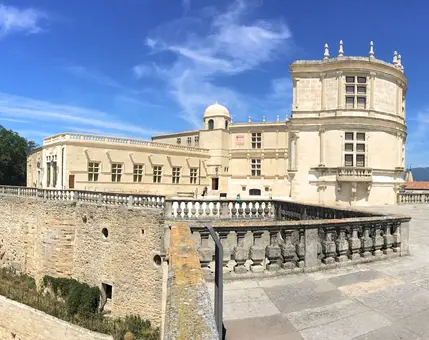
Estaing Castle / Valéry Giscard d’Estaing
The Estaing Castle (Aveyron) was home to the illustrious d’Estaing family for nearly 800 years! From Richard the Lionheart’s comrade-in-arms to the Admiral of France, via the bishops and governors of Rouergue, this name can be found all over France, and particularly in Rouergue. In 1794, the château was confiscated by the State as national property and sold off in lots; from 1836 onwards, it became home to a religious congregation of nuns.
The château was purchased in 2005 by a property investment company (SCI) set up by Valéry Giscard d’Estaing, former President of the French Republic (1974–1981). As a matter of interest, it was in 1922 that the Giscard family obtained, by decree of the Council of State, permission to add the name of their ancestor, Lucie-Madeleine d’Estaing, to their own. Thanks to this new owner, the château has been given a new lease of life. Extensive restoration work has now made it possible for the château to welcome visitors to explore an exhibition on the life of the former President.
-

Château d'Estaing
Château
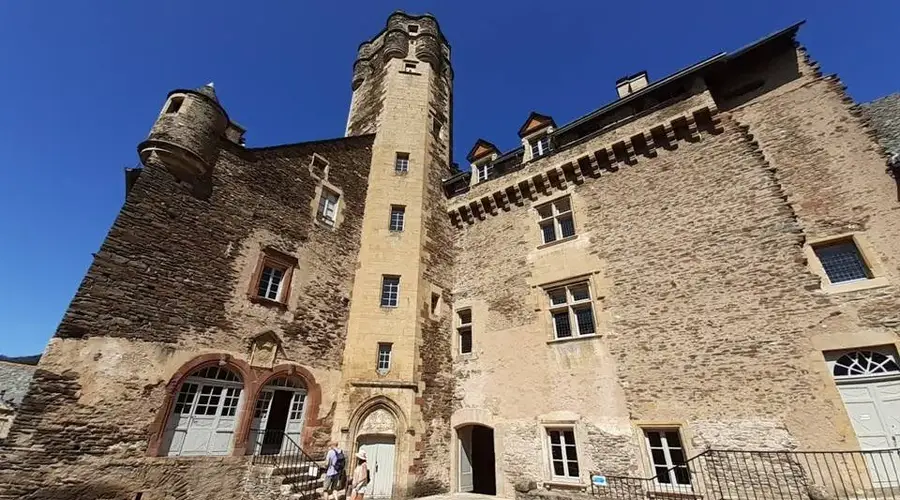
Montrésor Castle / Count Branicki
The Château de Montrésor (Indre-et-Loire), built in the Renaissance style (though traces of a medieval castle still remain), was known in the 15th century as the favourite residence of Imbert de Bastarnay, a wealthy adviser to King Louis XII. However, its current Second Empire-style décor is the work of the Polish Count Xavier Branicki, aide-de-camp to Tsar Nicholas I and later a political exile, who purchased the château in 1849 and imbued it with its distinctive Slavic character.
Thanks to him, the château now boasts one of the largest collections of Polish artworks in France (paintings, silverware) and an extensive library containing several thousand volumes. The château is open to visitors, as is its romantic-style park, which offers stunning views over the Indrois.
-
Château de Montrésor
Château
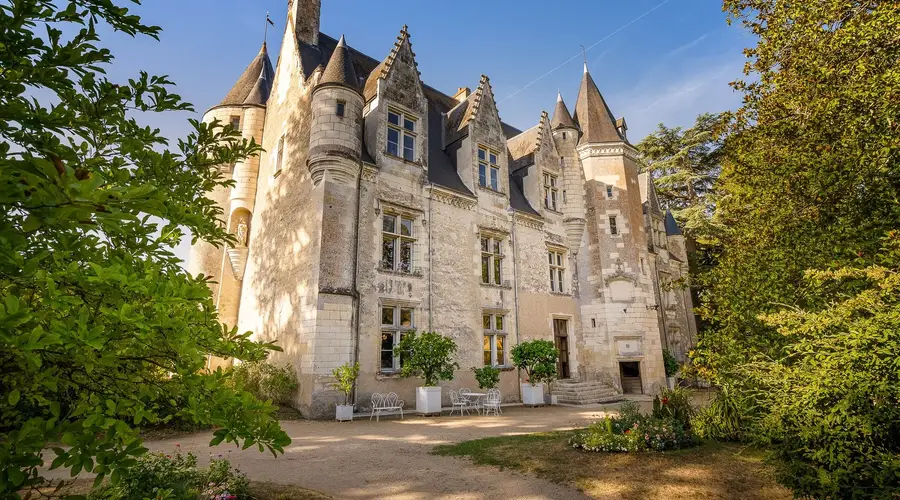
The Château des Milandes in Castelnaud-la-Chapelle / Joséphine Baker
It was the de Caumont family, owners of Castelnaud Castle (Dordogne), who had the château built in the 15th century to please Madame, who found the living quarters at Castelnaud Castle rather not to her taste. But the Château des Milandes is better known today for having been the home of Joséphine Baker in the 20th century (the château also holds the ‘Maison des Illustres’ designation). An American African-American revue dancer, and later a singer, Joséphine Baker was known for her generosity, which probably led to her losing the château in the late 1960s; burdened by debt, she was forced to resume her performing career until her death in 1975.
During your tour of the château, as well as learning about the architectural features and the Caumont family, you’ll discover all about the extraordinary life of this big-hearted woman. The château’s gardens, classified as a ‘Jardin Remarquable’, round off the visit.
Belcastel Castle / Fernand Pouillon
The history of the Belcastel Castle (Aveyron) dates back to the 9th century. Abandoned in the 15th century, it was left to fall into ruin by an owner who sold off its stonework. It was not until 1973 that it rose from the ashes, when the architect Fernand Pouillon discovered Belcastel and the ruins of its castle. Made famous for the reconstruction of the Vieux Port in Marseille following the Nazi bombings, Fernand Pouillon was also involved in the construction of numerous social housing projects, notably in Algeria, as well as many tourist complexes.
In 1974, Fernand Pouillon undertook a complete reconstruction of the château, which took eight years, and made it his main residence. He died in 1986 and is buried in Belcastel cemetery, anonymously, as requested in his last will and testament. The château is now open to visitors and hosts, amongst other things, exhibitions of contemporary art.
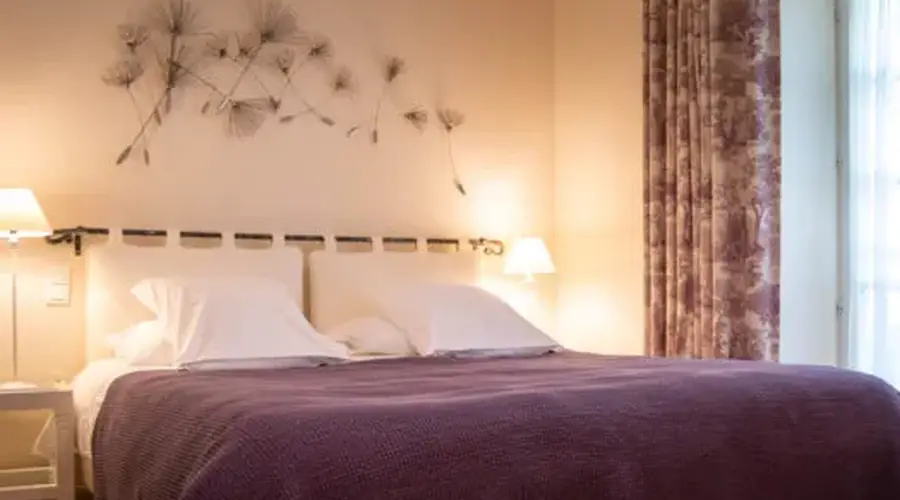
Our top tip in Belcastel: stay opposite the château
-

Hôtel du Vieux Pont
Hôtel - restaurant
On the same theme: Les Plus Beaux Villages de France, featuring castles and fortifications
Discover our other suggestions for exploring the theme of castles and fortifications:
The Middle Ages and the Renaissance
Learn more
A discovery tour of the châteaux of the Périgord
Learn more
Castles and men
Learn more